How to Stock a Home Bar
A phase-by-phase starter plan for buying the tools, bottles, ingredients, and glassware that unlock the most drinks without filling your shelves with one-use clutter.
Building a proper home bar is rewarding—and incredibly easy to overspend on. The goal is not to own everything. It is to choose versatile tools and ingredients that work together across dozens of drinks.
This guide is arranged in strict priority order. Complete each phase before moving on and you will build a capable bar without filling your shelves with one-use clutter.
The Bare-Minimum Tools
Before buying alcohol, get the equipment required to measure, chill, mix, and strain it. Skip oversized bar kits filled with novelty pieces. Four tools are enough to begin.
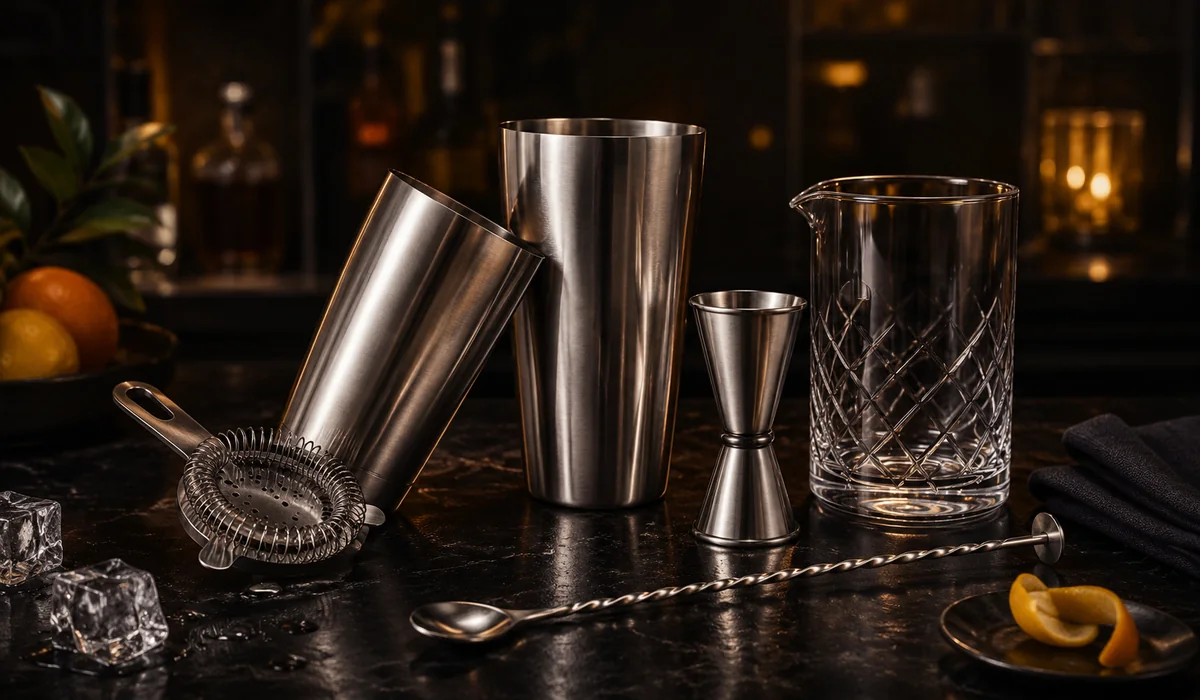
Boston Shaker
Skip cobbler shakers with built-in strainers. They can freeze shut, strain slowly, and become frustrating during service.
A Boston shaker uses two nesting stainless-steel tins. It is durable, easy to clean, quick to open, and built for years of use.
Jigger
Cocktails depend on repeatable ratios. Guessing measurements is the fastest way to make an otherwise good recipe taste wrong.
Look for a Japanese-style jigger with 2-ounce and 1-ounce sides, plus internal markings for common smaller measures.
Hawthorne Strainer
The spring-loaded Hawthorne strainer fits over a shaking tin and holds back ice, seeds, and larger pieces of citrus pulp.
Choose a sturdy stainless-steel model that sits securely over your shaker rather than an ornate one with unnecessary parts.
Bar Spoon and Mixing Glass
Spirit-forward drinks such as Manhattans and Negronis are usually stirred instead of shaken.
A sturdy pint glass can serve as your first mixing glass, but a long coiled bar spoon makes controlled stirring much easier.
The Core Spirits
These four categories unlock a broad range of classics. Choose dependable mid-shelf workhorse bottles rather than expensive sipping bottles whose nuance may disappear in a mixed drink.
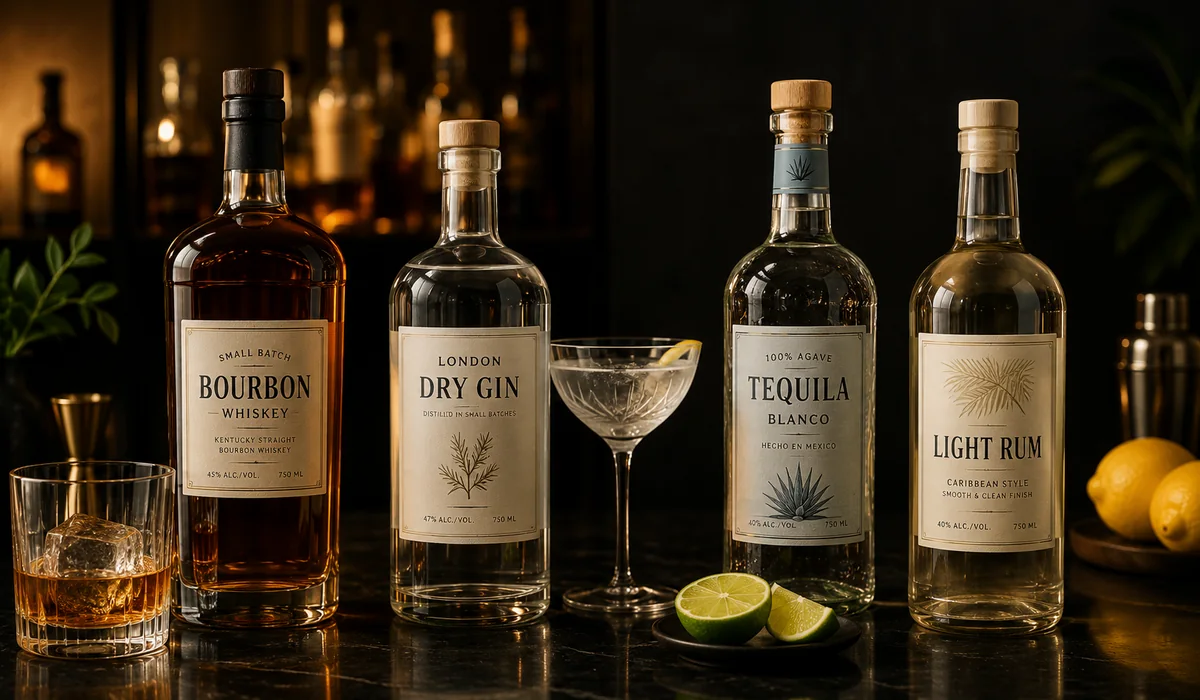
Bourbon or Rye Whiskey
Bourbon gives drinks a sweeter, rounder profile. Rye is spicier and often cuts through vermouth and bitters more aggressively.
Opens up: Old Fashioneds, Manhattans, Whiskey Sours
London Dry Gin
A clean, juniper-forward London dry gin is one of the most useful bottles in a starter bar.
Opens up: Martinis, Gimlets, Tom Collinses, Gin & Tonics
Blanco Tequila
Look for a bottle clearly labeled 100% agave. Blanco tequila is bright, versatile, and especially useful with fresh citrus.
Opens up: Margaritas, Palomas, Tequila Sours
Light or White Rum
A lightly aged, filtered white rum offers more character than the cheapest clear rum while remaining crisp and versatile.
Opens up: Daiquiris, Mojitos, Cuba Libres
Modifiers and Bitters
Base spirits provide strength. Modifiers provide sweetness, bitterness, aroma, texture, and identity. These are the bottles that turn liquor into a finished cocktail.
Angostura Aromatic Bitters
Bitters are often described as the salt and pepper of the cocktail world. A few dashes can tie sweetness and spirit together while adding spice and depth.
Essential for: Old Fashioneds and Manhattans
Quality Orange Liqueur
A dependable orange liqueur such as Cointreau acts as a bridge between citrus, sugar, and spirit. Avoid extremely cheap, artificially flavored bottles.
Essential for: Margaritas, Sidecars, Cosmopolitans
Sweet and Dry Vermouth
Sweet vermouth supports drinks such as Manhattans and Negronis. Dry vermouth is used in Martinis and other lighter aperitif-style drinks.
Buy smaller bottles when possible
Syrups and Fresh Citrus
This is where a good home bar begins separating itself from a mediocre one. Fresh juice and properly made syrup have an immediate effect on brightness, balance, and texture.
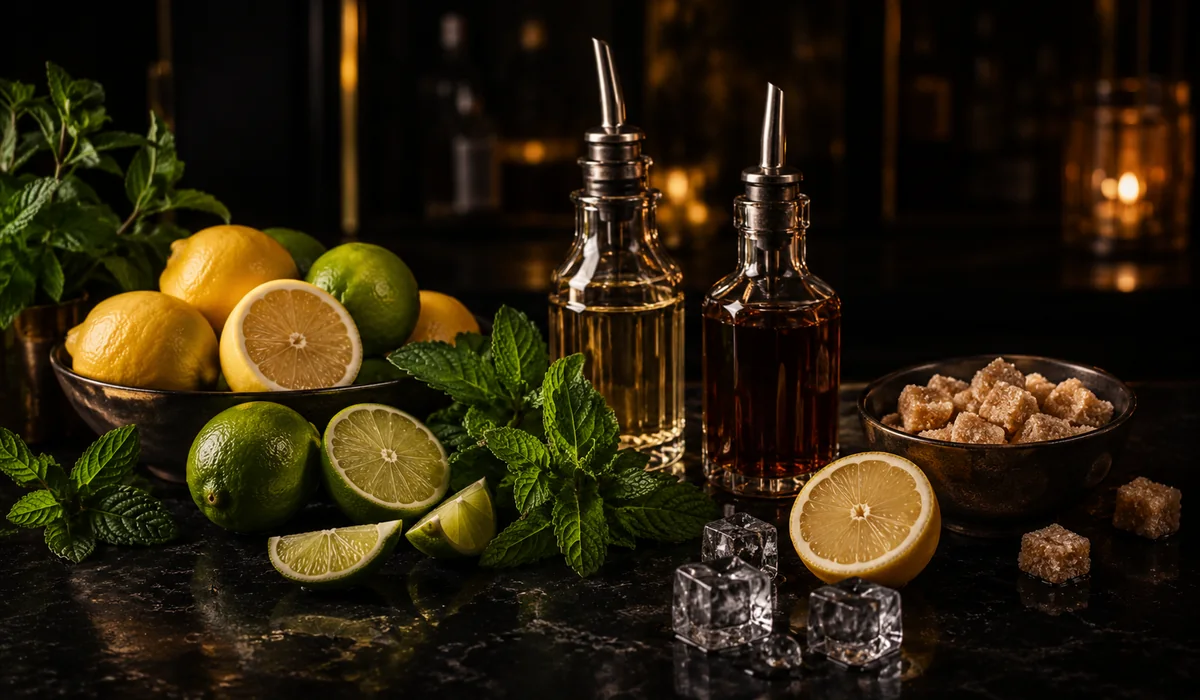
Fresh Lemons and Limes
Keep a few on hand and squeeze them shortly before making the drink. Citrus loses brightness and aroma after juicing.
Simple Syrup
Combine equal parts white sugar and warm water. Stir or whisk until completely dissolved, then refrigerate in a clean, covered container.
Demerara Syrup
Combine two parts raw cane or demerara sugar with one part warm water. The richer texture and molasses notes work especially well with whiskey and rum.
The Essential Glassware
You do not need a different glass for every cocktail. Three versatile shapes cover nearly every common home-bar situation.
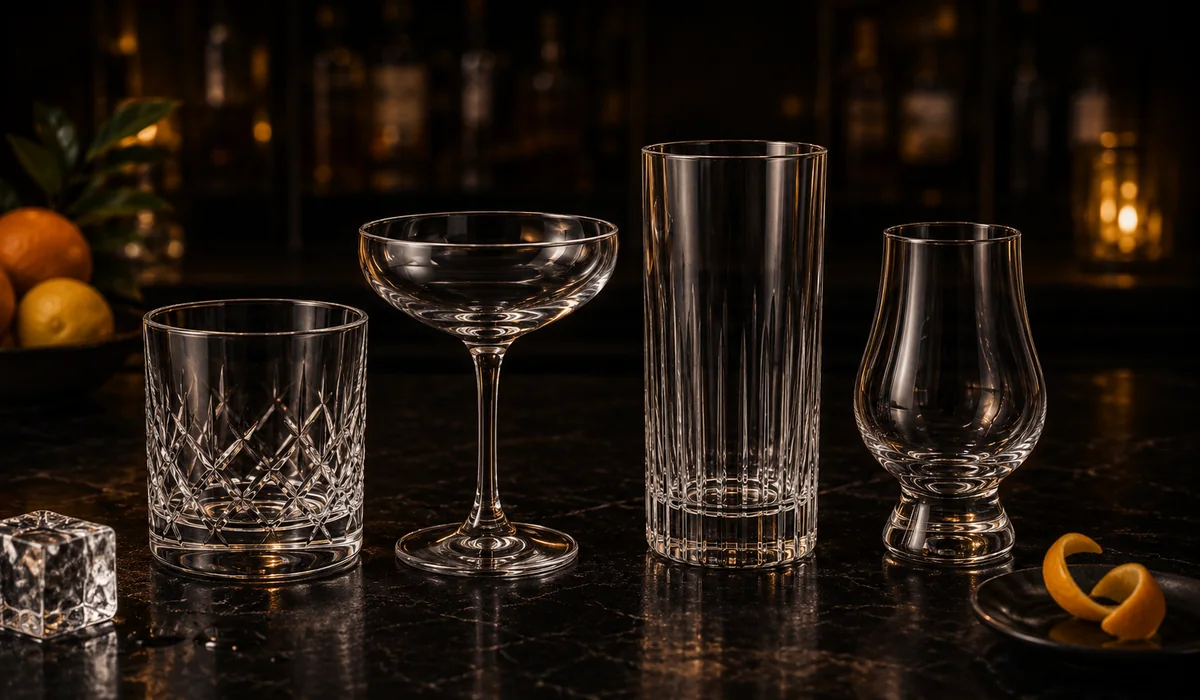
Rocks or Double Old Fashioned Glass
The workhorse. Look for a heavy-bottomed glass in the 10- to 12-ounce range with enough room for one large cube.
Best for: Old Fashioneds, Negronis, drinks on the rocks, and spirits served neat
View our rocks-glass pick Affiliate linkCoupe Glass
A 5- to 7-ounce coupe is easier to carry than a sharply angled Martini glass. The stem also keeps warm hands away from a drink served without ice.
Best for: Martinis, Manhattans, Daiquiris, Gimlets
View our coupe pick Affiliate linkHighball or Collins Glass
A tall, narrow glass in the 10- to 14-ounce range keeps long drinks compact and helps preserve carbonation better than a wide glass.
Best for: Tom Collinses, Gin & Tonics, Palomas, Mojitos
View our highball pick Affiliate linkThe Starter-Bar Cheat Sheet
Buy these categories in order and you will have a focused, flexible foundation instead of a shelf full of disconnected products.
Shaker, jigger, strainer, bar spoon
Choose durable stainless steel and function over decoration.
Whiskey, gin, tequila, white rum
Buy versatile mid-shelf workhorses before premium bottles.
Bitters, orange liqueur, vermouth
Keep opened vermouth refrigerated.
Lemons, limes, simple and demerara syrup
Use fresh juice and make basic sugar syrups at home.
Rocks, coupe, and highball glasses
Three shapes are enough to serve most classic drinks properly.
Next: Make Those Bottles Work
Once the foundation is in place, learn how reliable recipes, fresh ingredients, technique, and presentation turn those bottles into consistently better drinks.