How to Make Better Cocktails at Home
A good cocktail is not magic. It usually comes down to four things: a reliable recipe, the right ingredients, controlled technique, and thoughtful presentation.
Better drinks rarely require more complicated recipes or a shelf full of expensive bottles. Improvement usually comes from doing the fundamentals consistently well.
Start with a dependable formula, use ingredients that support it, control temperature and dilution, then serve the result with intention.
Start With a Good Recipe
A reliable recipe gives you a balanced starting point. Learn why established drinks work before changing every ingredient at once.

Begin With Established Classics
Classics have survived because their ratios create recognizable structure and balance. They give new bartenders a dependable reference point.
Start with: Daiquiri, Old Fashioned, Martini, Margarita
Use Sources That Explain the Drink
A strong modern recipe should provide measurements, technique, glassware, and enough context to understand how the drink is intended to taste.
Change One Variable at a Time
Adjust one spirit, sweetener, citrus component, or garnish while keeping the rest of the recipe stable. That makes the result easier to understand and repeat.
Use Ingredients That Support the Recipe
Expensive does not automatically mean better. Freshness, compatibility, and correct proportions matter more than chasing premium labels.

Use Fresh Citrus
Lemon and lime juice lose brightness and aroma after they are squeezed. Juice close to service whenever citrus is central to the recipe.
Choose Spirits for Mixing
A dependable mixing spirit should remain recognizable alongside citrus, syrup, vermouth, liqueur, and bitters without requiring an ultra-premium price.
Measure Sweeteners and Modifiers
Syrups, liqueurs, vermouth, and bitters can change a drink quickly. Measure them with the same care as the base spirit.
Treat Garnish as Part of the Drink
Citrus oils, mint, herbs, salt, spice, and aromatic bitters influence the first impression before the drink reaches the palate.
Control Temperature, Dilution, and Texture
Technique is how a written recipe becomes a finished drink. Measure accurately, use enough cold ice, and choose the mixing method that creates the intended texture.
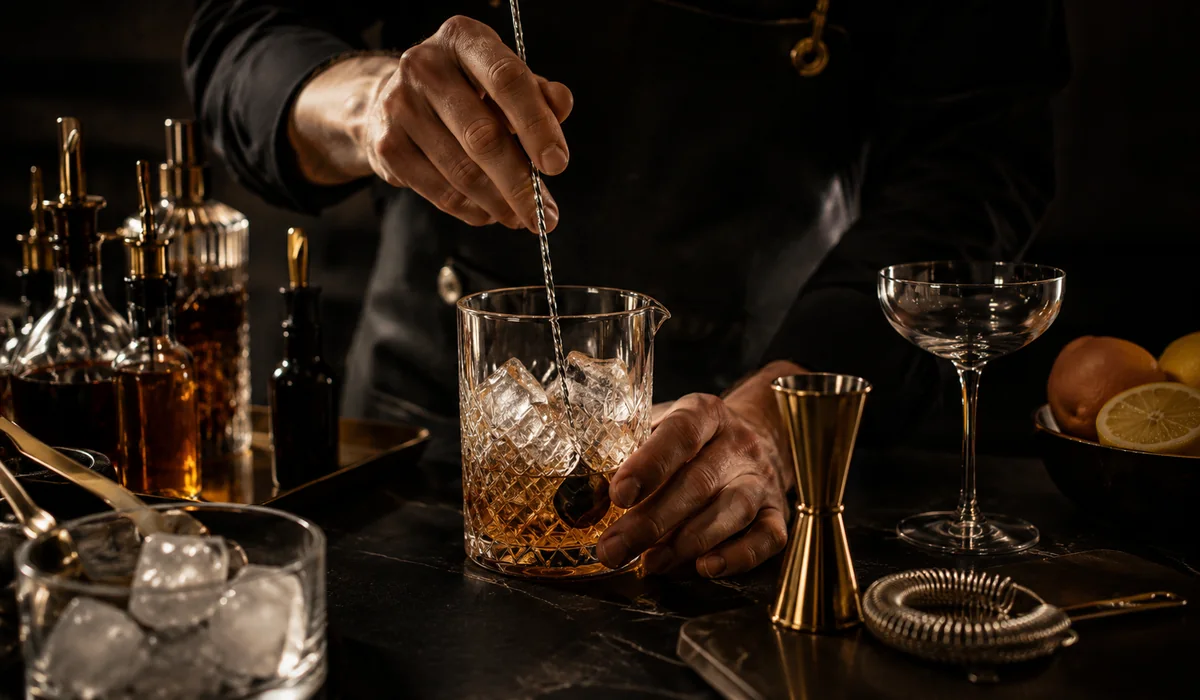
Measure Every Ingredient
Accurate measurement makes a successful drink repeatable and gives you a trustworthy baseline when something needs adjusting.
Use Plenty of Cold, Solid Ice
Ice controls both temperature and dilution. Avoid a few wet, half-melted cubes that cannot chill the drink efficiently.
Build Texture and Integration
Shake drinks containing citrus, juice, dairy, egg, or other ingredients that benefit from vigorous mixing and aeration.
Preserve Clarity and Silkiness
Stir spirit-forward drinks when you want controlled dilution, minimal aeration, and a clear, composed appearance.
Make the Drink Look Intentional
Presentation does not need to be elaborate. The correct glass, clean ice, a deliberate garnish, and an orderly pour make the drink feel complete.

Match the Shape to the Drink
Use stemmed glassware for cold drinks served without ice, rocks glasses for short drinks over ice, and highballs for longer carbonated drinks.
Use the Right Serving Ice
Large cubes suit spirit-forward rocks drinks. Pebble or crushed ice belongs in recipes designed to evolve through continued chilling and dilution.
Use One Deliberate Finishing Element
A clean citrus peel, expressed oils, fresh herb, cherry, olive, or restrained spice is usually stronger than an overloaded garnish arrangement.
Clean the Glass Before Serving
Wipe drips, fingerprints, citrus pulp, and stray ice from the outside and rim. Small details determine whether a drink appears polished or careless.
The Better-Cocktail Cheat Sheet
When a drink misses the mark, diagnose these four foundations before replacing the recipe or buying another bottle.
Begin with dependable ratios
Learn the original before changing several variables.
Prioritize freshness and compatibility
Expensive ingredients cannot rescue stale or unbalanced ones.
Measure, chill, dilute, and strain deliberately
Use shaking or stirring to create the intended texture.
Make every visible choice look intentional
Use suitable glassware, ice, garnish, and a clean final pour.
Next: Upgrade Your Ice Game
Take control of one of the most overlooked cocktail ingredients: the ice that chills, dilutes, textures, and presents the drink.